This article was written by a human being who mainly used AI for proofreading and typo hunting. In an era where AI is used everywhere and for anything, it sometimes matters to put the spotlight back on the human.
We all start somewhere, and at // STUDIO [1N] we started with La Guizi, a restaurant and coffee shop run by passionate people in Le Pré-Saint-Gervais, near Paris.
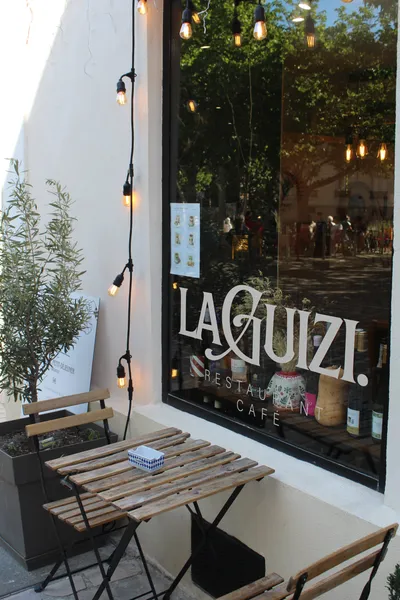
The chef wanted a website that makes people want to eat at the restaurant and that shows off its many assets, like its hidden terrace. She also needed a bespoke booking system, deliberately kept simple.
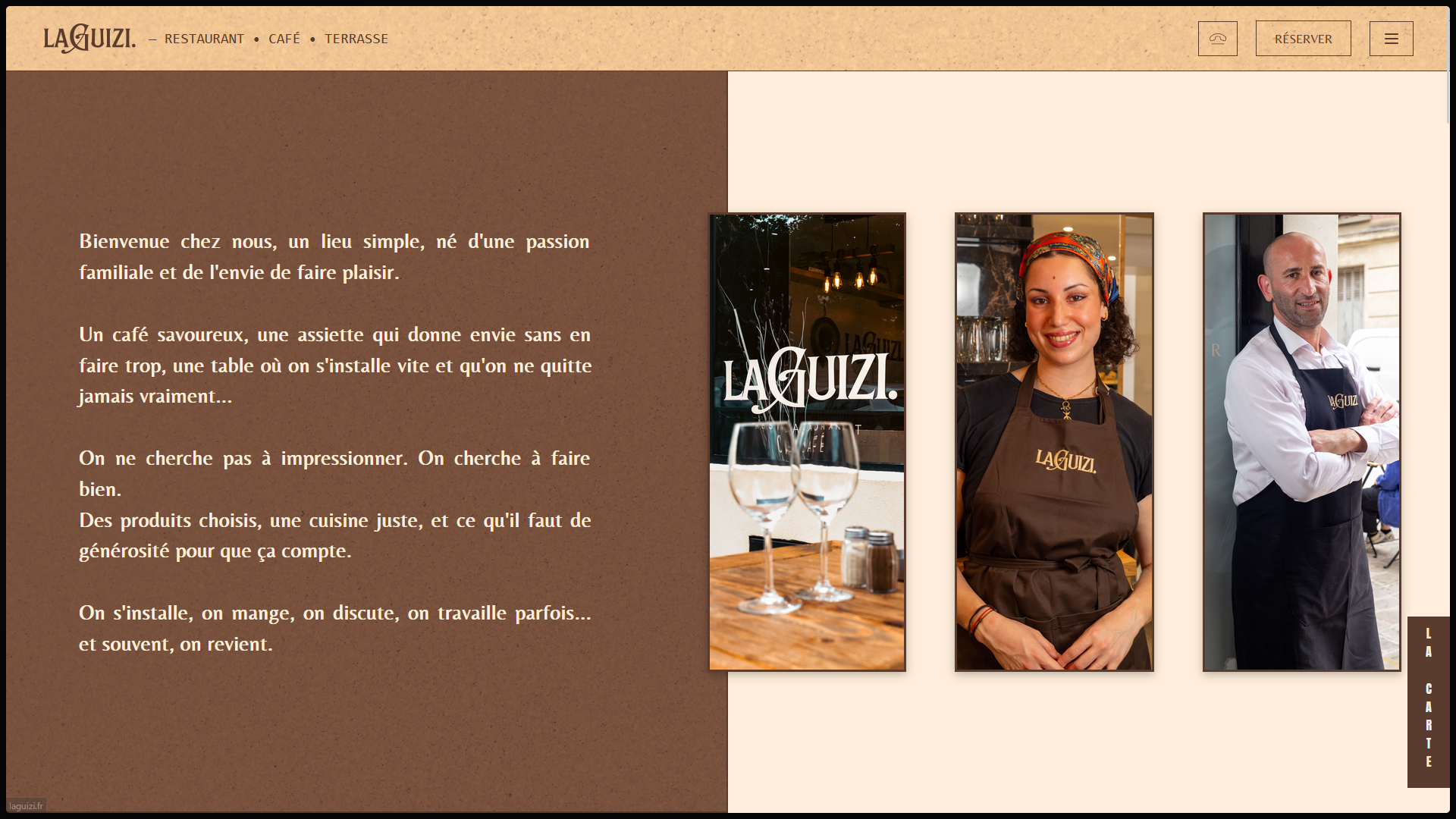
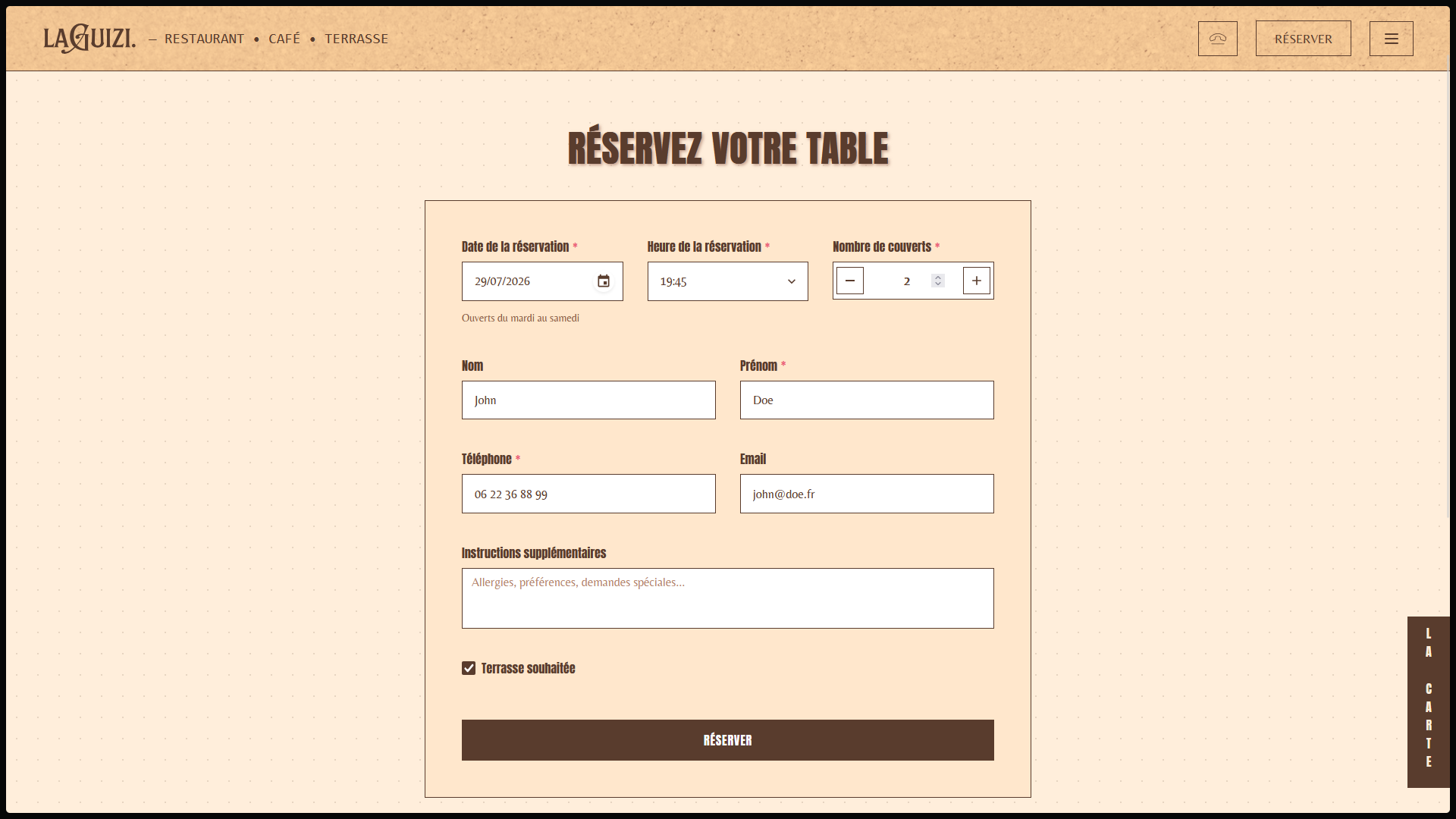
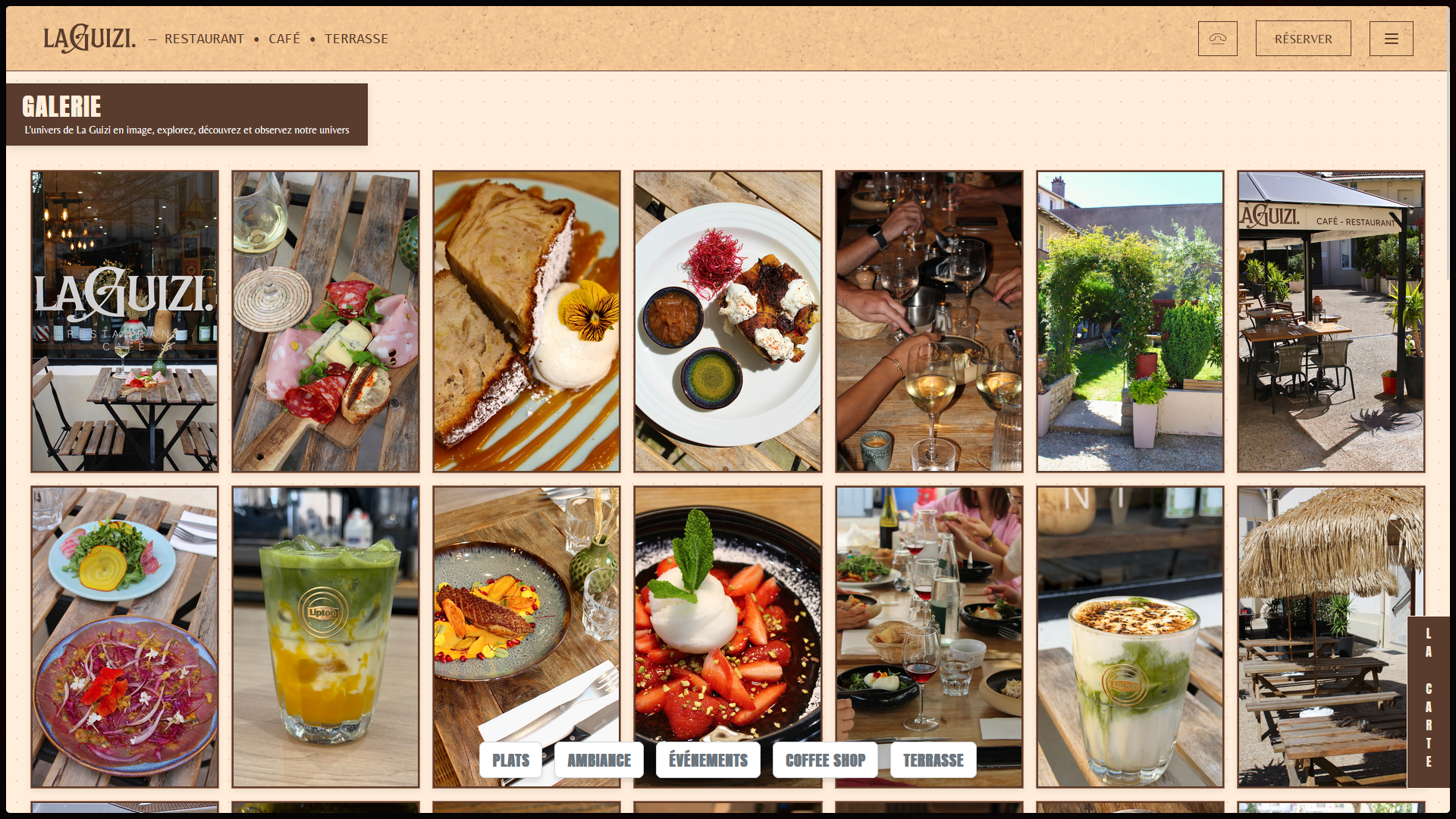
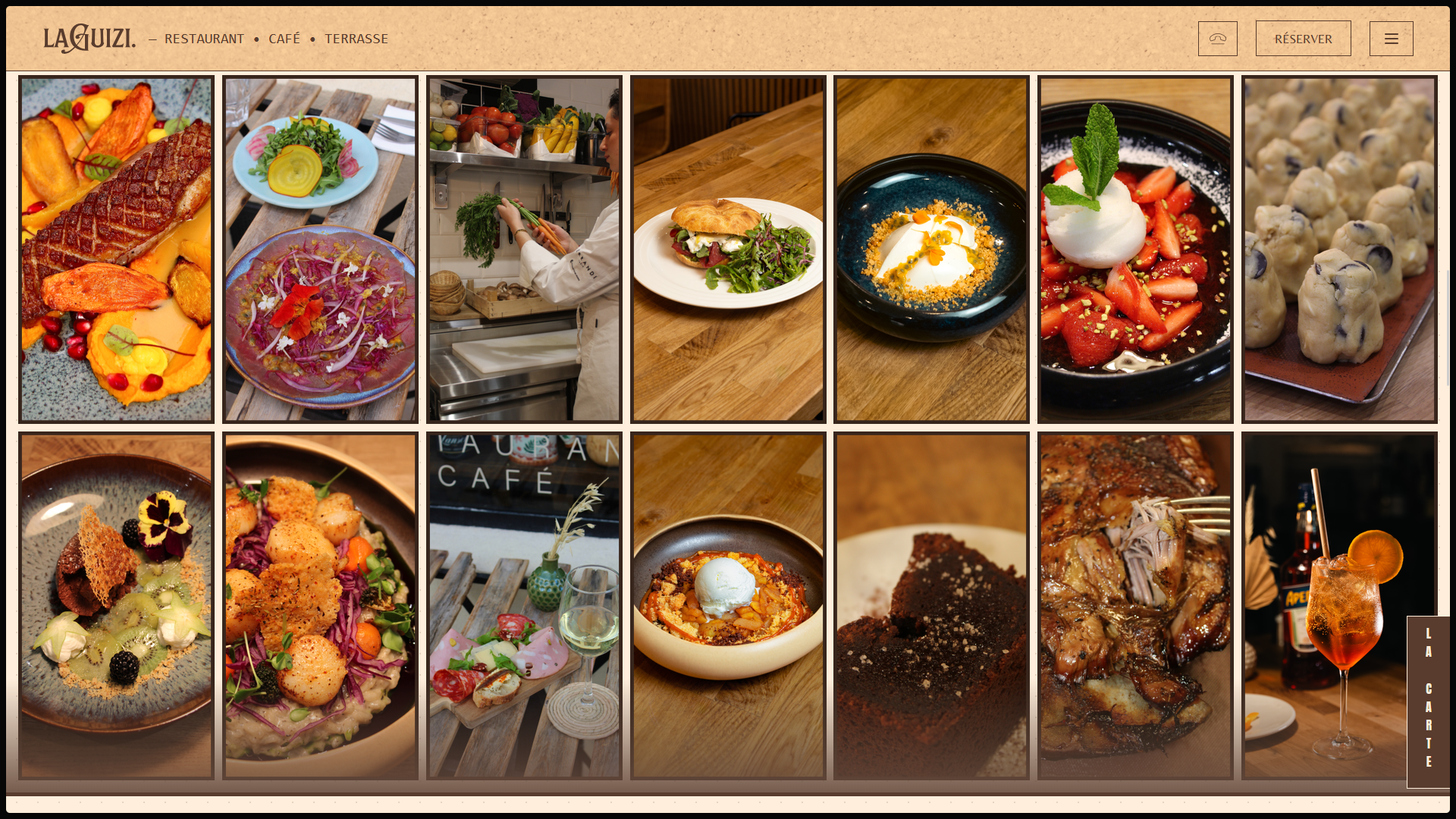
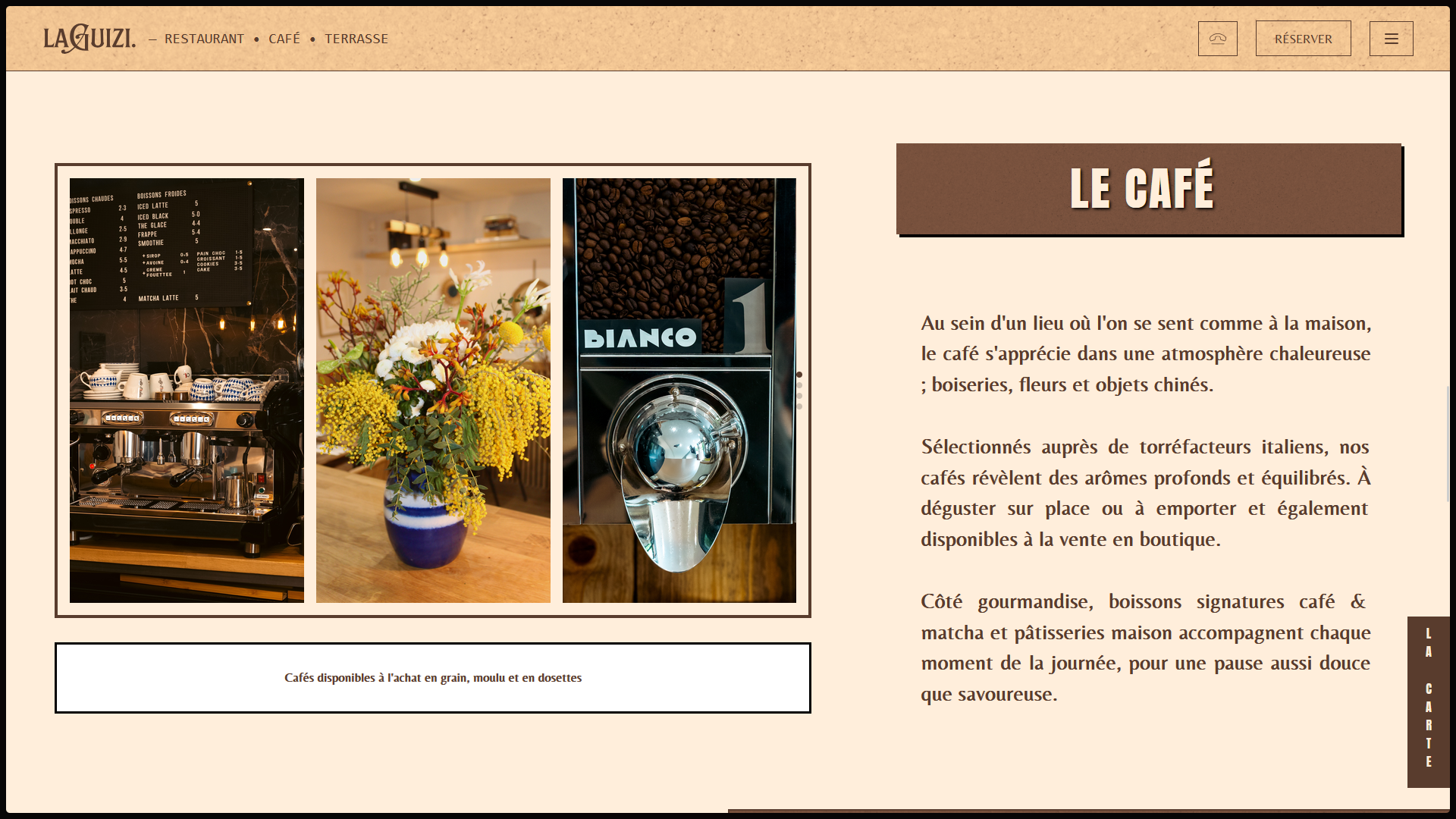
Screenshots of the website
Welcome to the very first case study from // STUDIO [1N]. For us, every project comes with an article breaking down some of our technical choices and putting the project a little more in the spotlight. This one is split into three short chapters that should make for a pleasant read whether you’re technical or not.
Got a project idea, or want a project like this one? Contact us.
Enjoy :)
Bookings
Our booking system is made of 3 building blocks, the first one being: the booking page
It’s a simple page where users fill in their details, with client-side validation handled by reglejs. There’s also an extra validation layer performed by Strapi. Pretty classic stuff, with the option to say you’d like to eat on the restaurant’s hidden terrace.
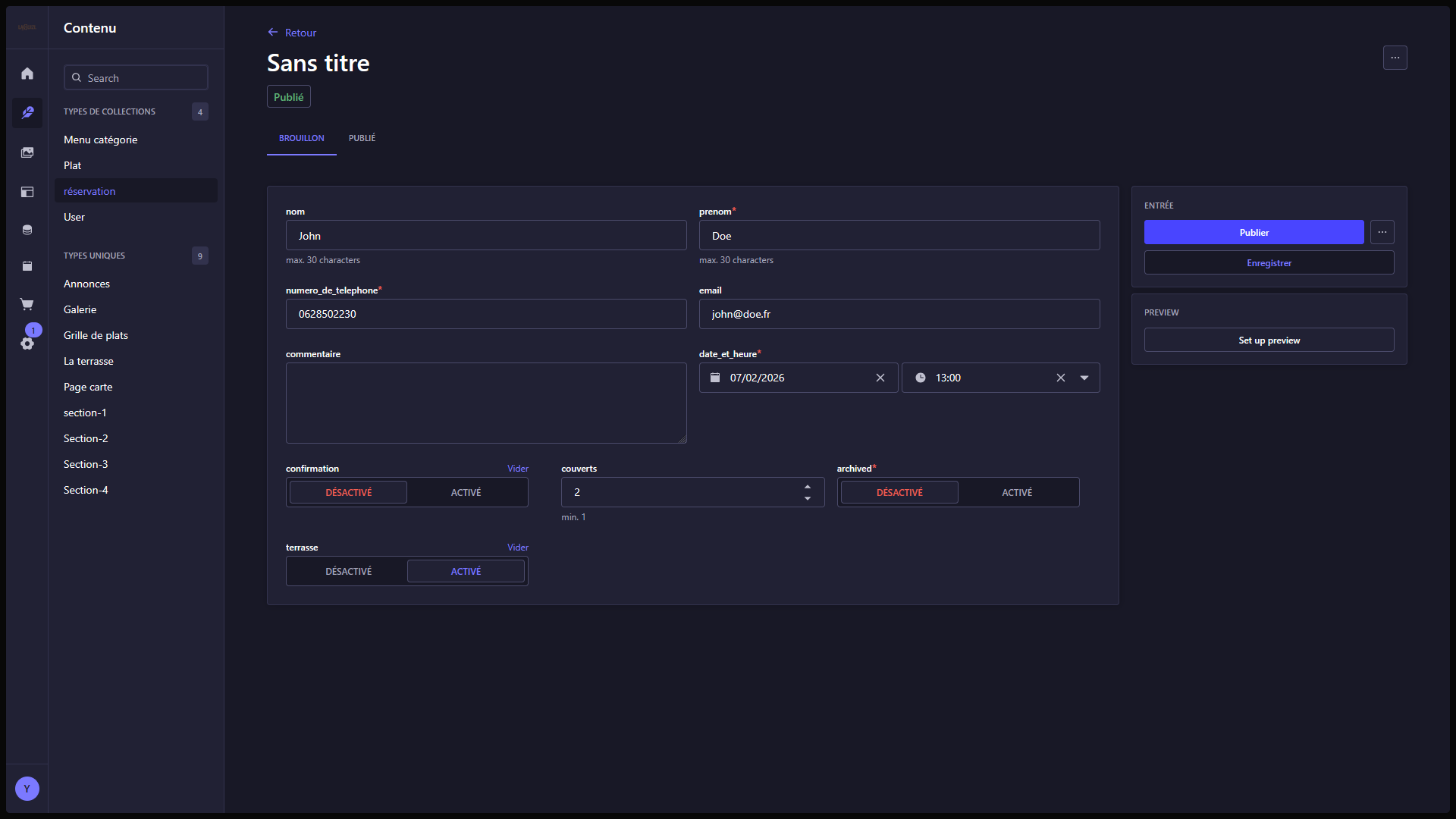
The booking page & a booking preview in Strapi
When a booking is made, it gets created in a Strapi collection. It then has to be confirmed by the chef, who sends a message to the phone number provided. It’s a simple, effective system that can be extended later on as needs grow — we could very well bolt a table management system onto it, for example.
The last building block covers automated emails and booking archival. For every new booking the chef receives an email with its details — the email was a must to guarantee a quick reply to customers making a booking. There’s also a recurring email with booking statistics for the current service (morning, evening). Past bookings are archived after 24 hours, and after a year they’re deleted to comply with GDPR.
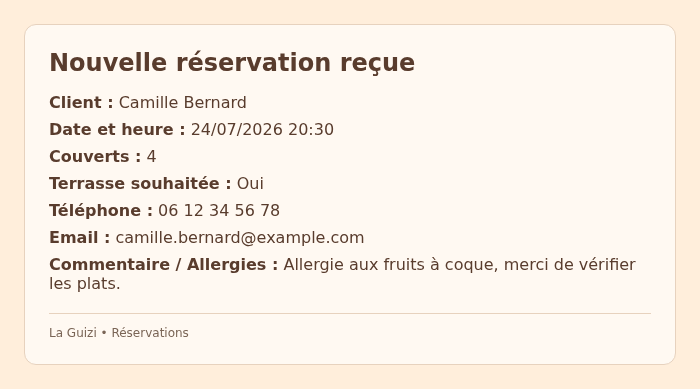
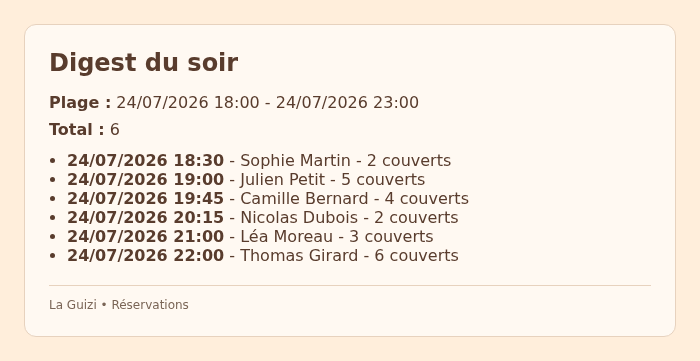
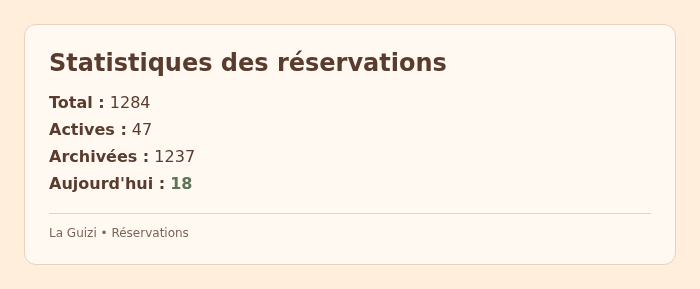
The various booking-related emails
Beyond bookings, we ran into another rather unexpected technical challenge that showed up quite late in development…
Strapi and the images that flip themselves
The La Guizi website has a huge amount of images — on the homepage, in the gallery, on pretty much every page. When we went to production and the chef started adding images, we hit a little problem:
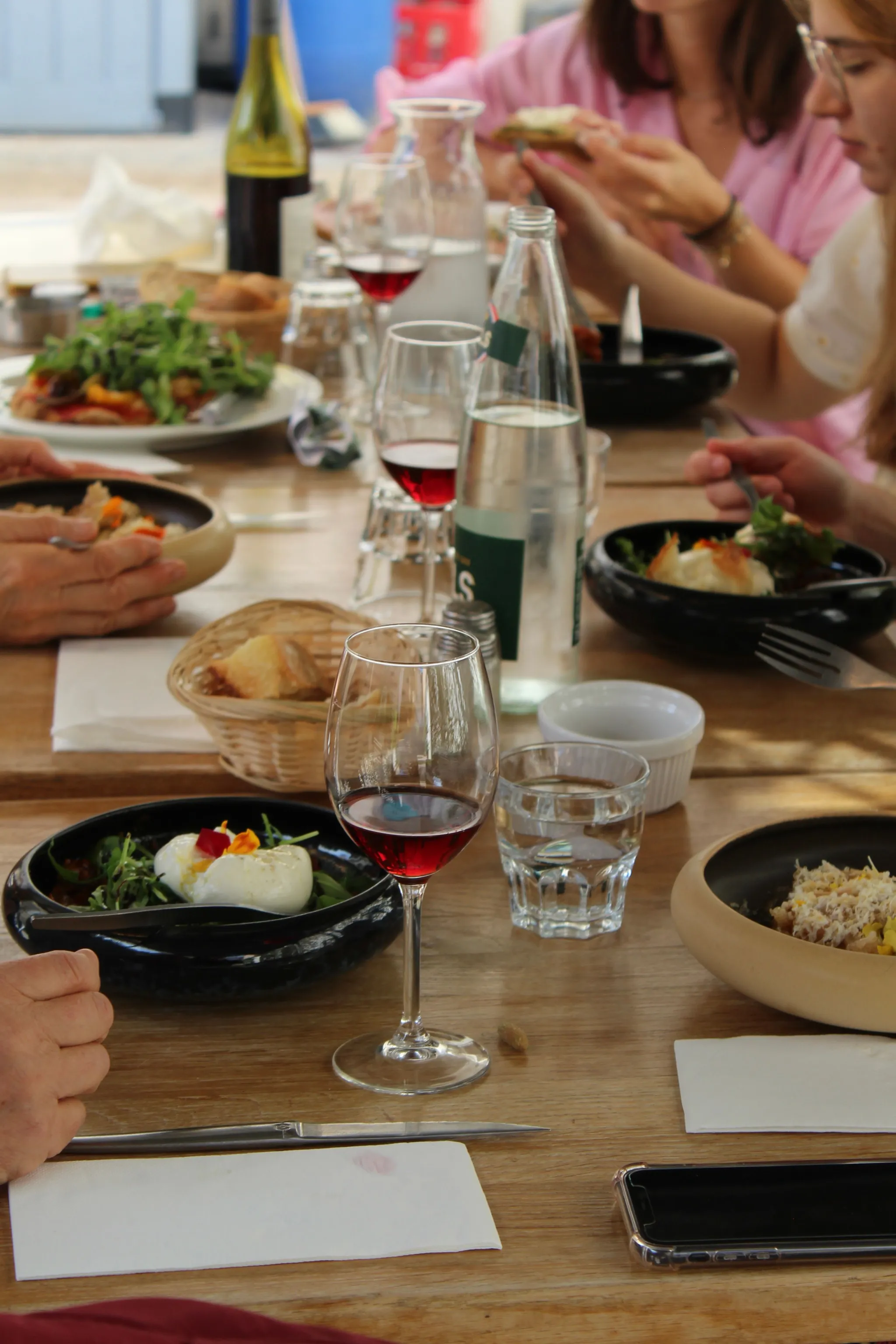 IMG_2043.jpg
As you can see above, some images turn out to be “stubborn” and flip themselves when uploaded. It’s a old, well-known Strapi issue, so we iterated, searched and dug without ever finding a real fix. We ended up disabling Strapi’s image optimisation, which solved the problem but created a new one.
Some of the images used on the site come straight from cameras: they require a lot of resources to display and can cause slowdowns on some devices. So our solution moved to the client side, thanks to that Holy Grail called @nuxt/image, which optimises image loading.
// General configuration for a nuxt project
export default defineNuxtConfig({
  // Your modules
  modules: [
    // ...
    '@nuxt/image',
  ],

  // Module configuration
  image: {
    domains: [
      new URL(process.env.STRAPI_URL || 'http://localhost:1337').hostname, // front end URL
      'my-images-bucket.com', // your image bucket URL
    ],
    quality: 80, // image quality
  },
})
Images are now loaded at a reduced quality, and on top of that, while they load we display a placeholder — much nicer than watching the image just pop in out of nowhere.
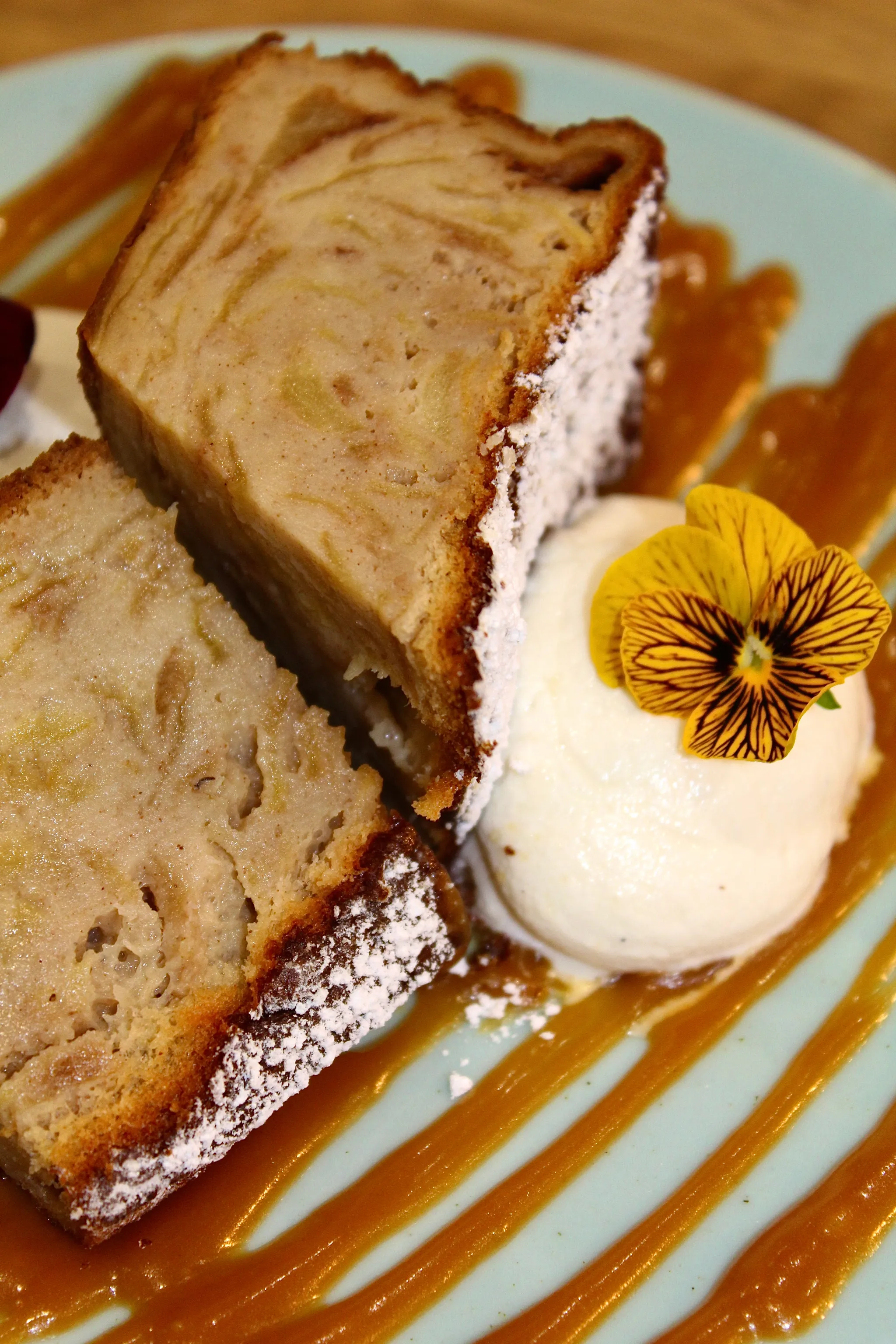
After that little victory, let’s tackle a lighter subject. Let’s talk statistics, let’s talk numbers, let’s talk Umami!
Umami, a taste for analytics
Umami is an analytics system comparable to Google Analytics, except it works without cookies and doesn’t track visitors personal information across sites. At // STUDIO [1N] we host our own instance on our servers based in France, and the service is included in the maintenance plan. We use it on all our projects, it’s GDPR-compliant, and it has every feature you’d expect from an analytics solution.
An analytics solution provides invaluable data that tells you what works and what doesn’t in your project, whether your users tend to leave your site, and what draws them in the most. You can also track your revenue if you run a shop or sell one or more products.
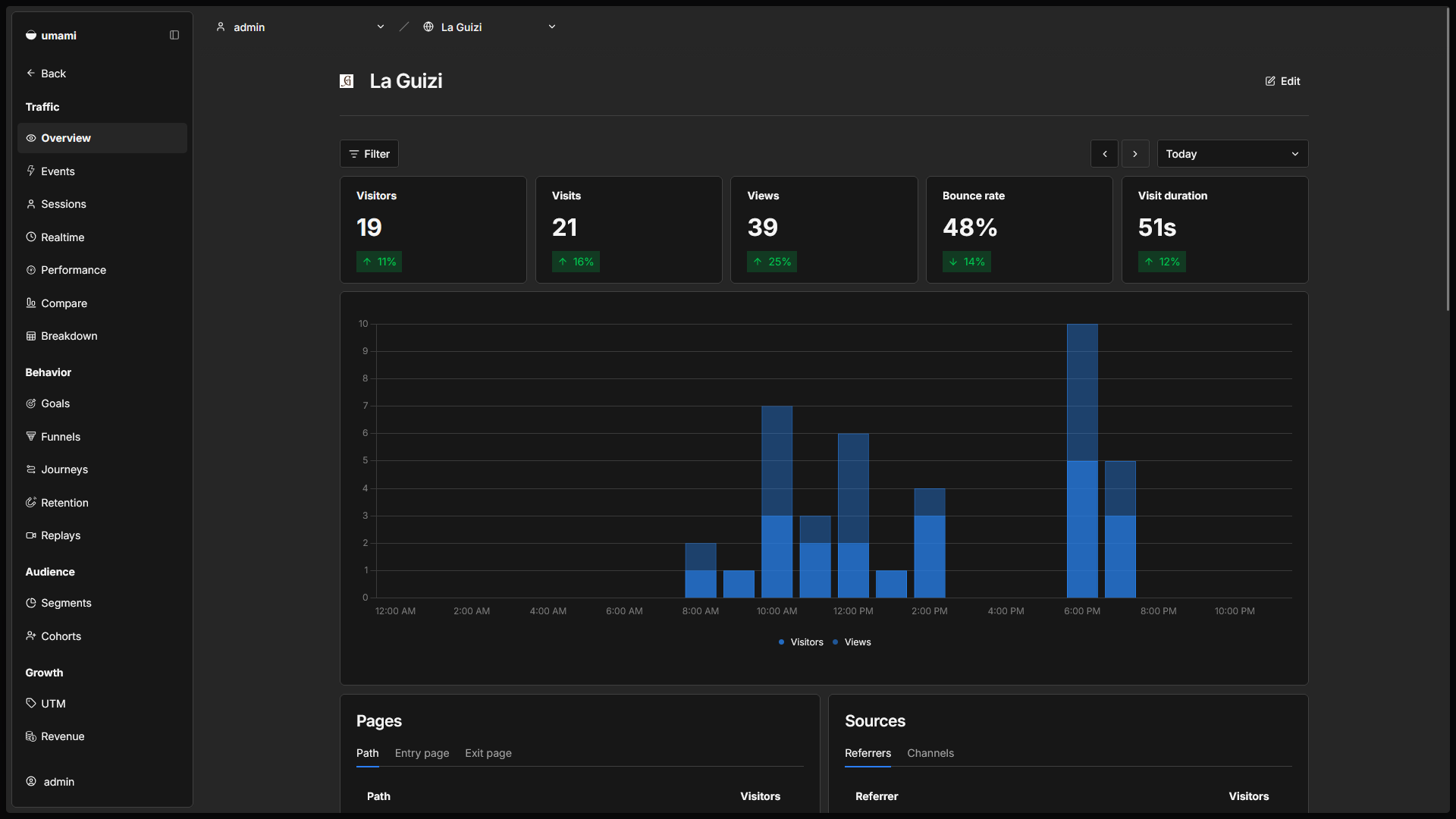
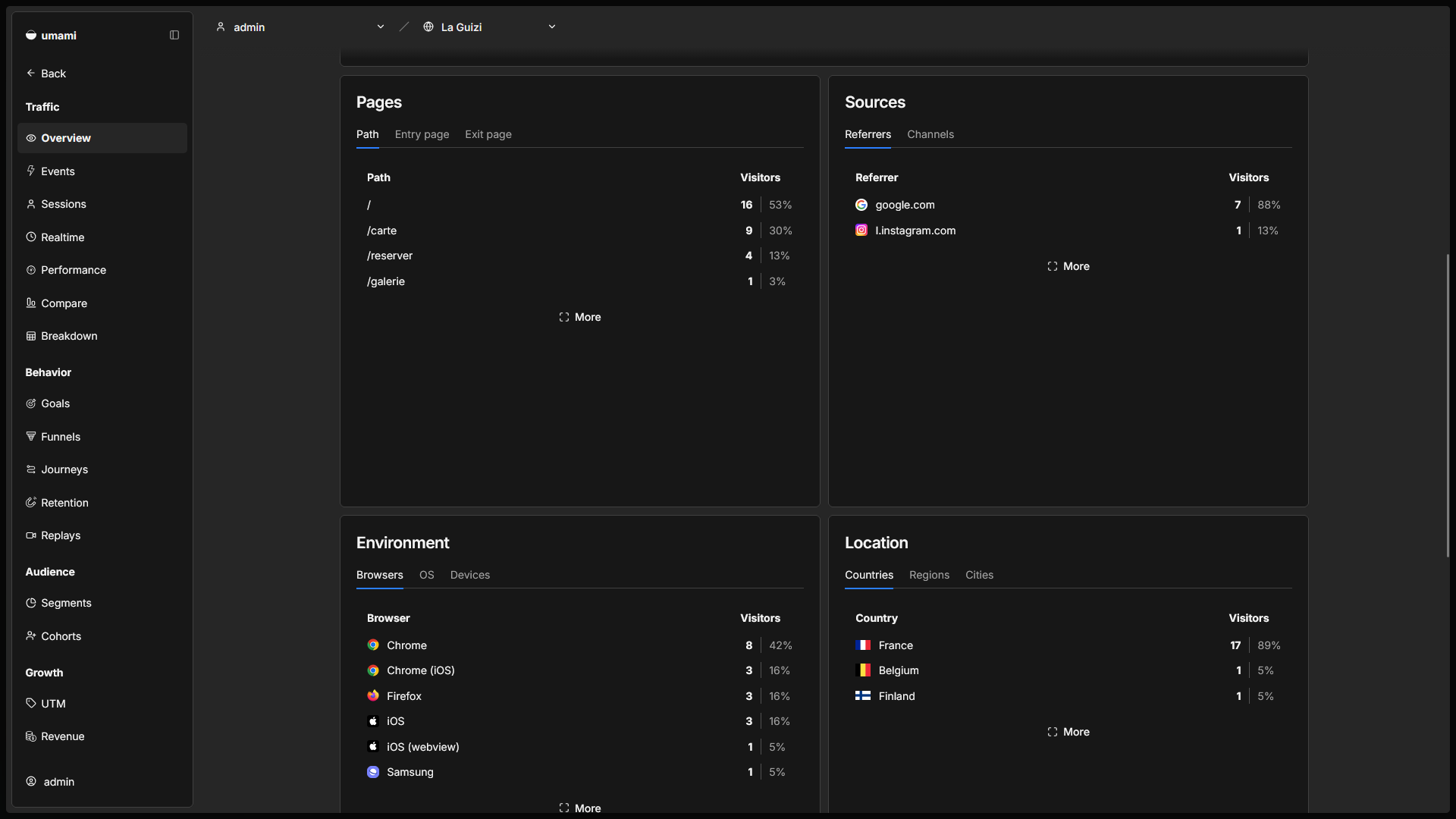
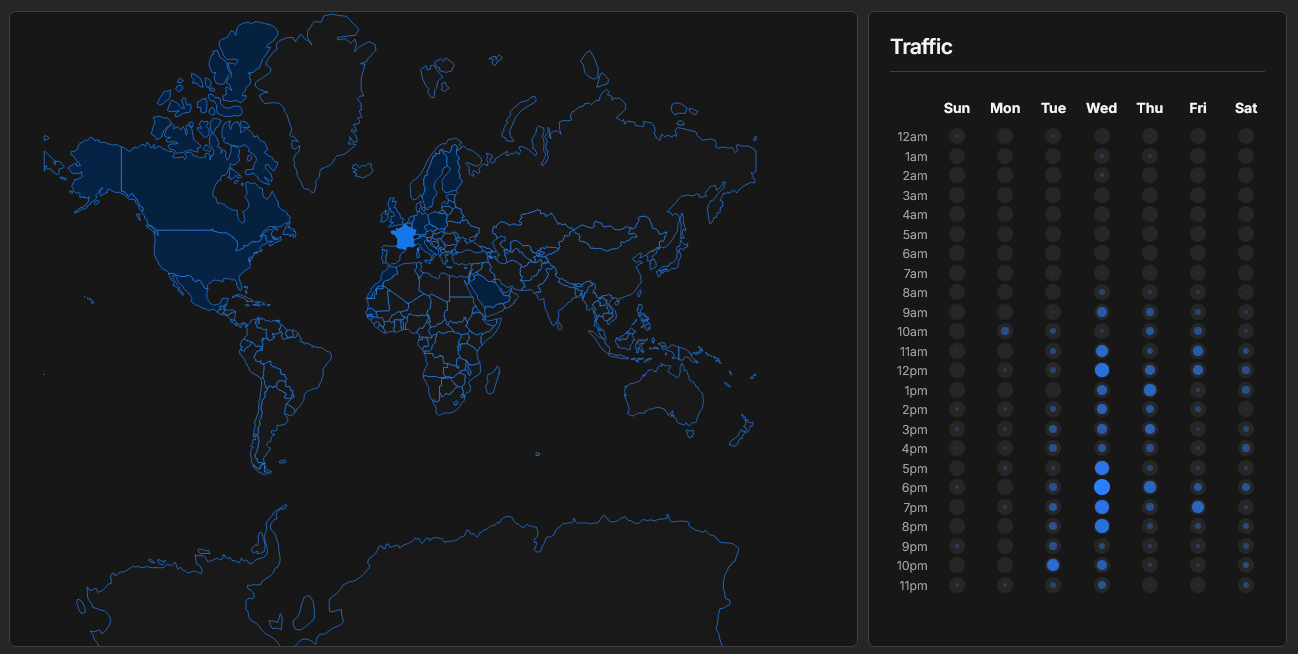
A website’s homepage in Umami (laguizi.fr)
The homepage provides essential information such as:
- The number of visitors and the number of views
- The different pages visited
- The sources (where visitors come from)
- The device and browser used
Events
Umami can also track events during a user’s visit. On this project we wanted to whet visitors’ appetites by displaying photos of the dishes in the dish grid on the homepage. The dish grid is made of cards that flip over when you move the mouse across them quickly enough, and that can be clicked to reveal the name of the dish.
Every time a dish is flipped, another random dish takes its place, which nudges users into playing with it a lot and trying to see every dish. It’s purely cosmetic — the menu is permanently available on the side of the screen — but it’s a playful way to get users interacting with the site.
Demo of the dish grid on desktop — mobile behaves much the same
And of course the events happening on that grid are tracked — the number of dishes flipped as well as the dishes clicked — which gives an idea of which dish is the most mouth-watering. This information can of course be exported to be used outside of Umami.
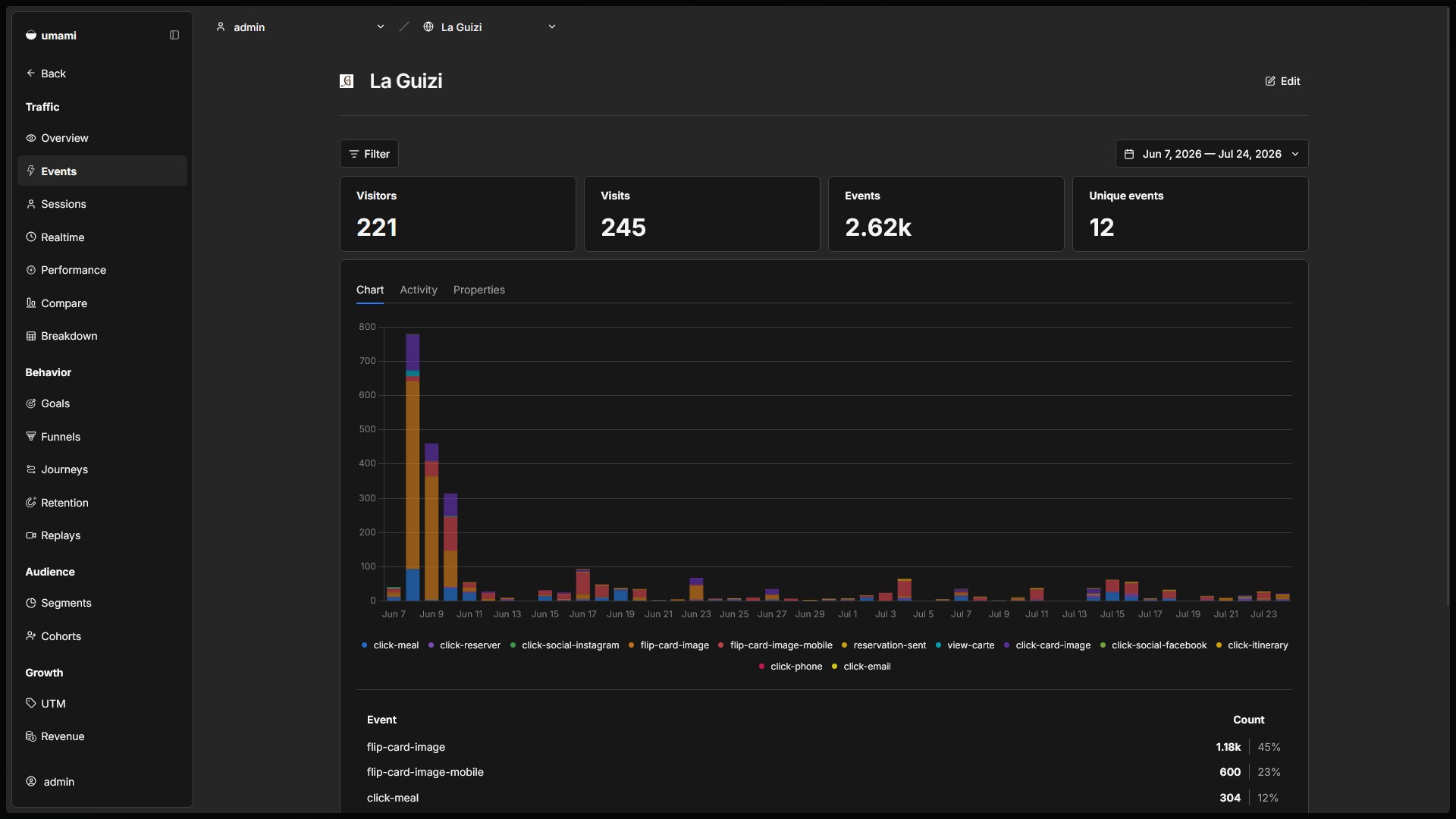
Since the site went live, the cards have been flipped more than 1000 times! 🥳
Session replays
Umami records user sessions while keeping their information private — nothing they type ever appears in the recording. It’s handy for spotting behaviours or even identifying key actions users may take. Both the tracking and the recording are completely invisible to the user and don’t degrade the experience in any way.
Demo of a recorded session
In short, Umami is a versatile tool that’s ideal for your projects. It has even more features that we might cover in another post — or that you can discover by doing a project with us.
What now?
We consider this project a success. Since going live, laguizi.fr has generated:
Figures as of July 25, 2026
- More than 2000 views and around 850 unique visitors
- 78% organic traffic (via Google)
- 63 bookings
Every day, a steady stream of visitors come to see the site, and inevitably some of them end up becoming customers of the restaurant. In an era where the internet and digital are everywhere, at // STUDIO [1N] we want to keep crafting unique, creative experiences that bring new customers to your business. We learn from our mistakes on every project so that each one is better than the last.
We’re actively looking for projects to keep the momentum going.
Got a project or an idea? Contact us :)
---- THANKS FOR READING ----